Design Process · June 2026 · 7 min read
Building a Mood Board for Your Home (Without Falling Down the Pinterest Rabbit Hole)
Almost every client I work with arrives at our first meeting with a folder of saved images — sometimes neatly organized in Pinterest boards, sometimes a chaotic camera roll, sometimes a stack of torn magazine pages held together with a paperclip. All of it is welcome. Those images are the most honest brief you can hand a designer, far more useful than trying to describe the home you want in words.
But there's a real skill to building a mood board that actually moves a project forward, instead of sending it in twelve directions at once. The goal isn't to collect every beautiful room you've ever seen. The goal is to find the through-line — the quiet thread that connects the images you keep coming back to — and to be honest about whether that thread fits the life you actually live.
Start by collecting without judgment
For the first two weeks, save anything that catches your eye, even if it seems contradictory. A formal French parlor and a Belgian farmhouse and a Japandi bathroom all in one board is fine. What you're doing here is data collection — letting your eye tell you what it loves before your brain talks you out of it. Don't edit yet. Don't worry that the styles don't match. Just save.
Then look for the pattern
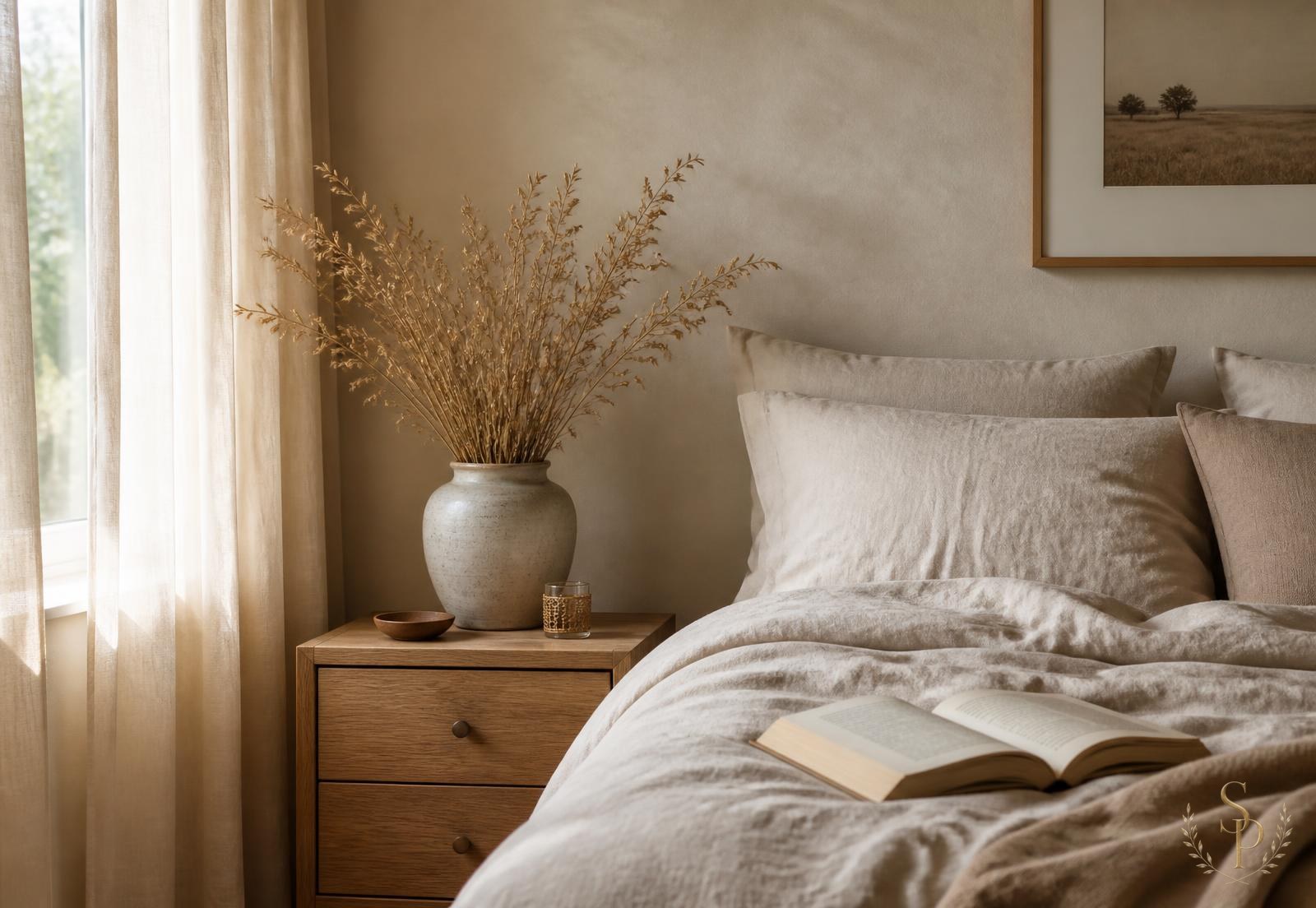
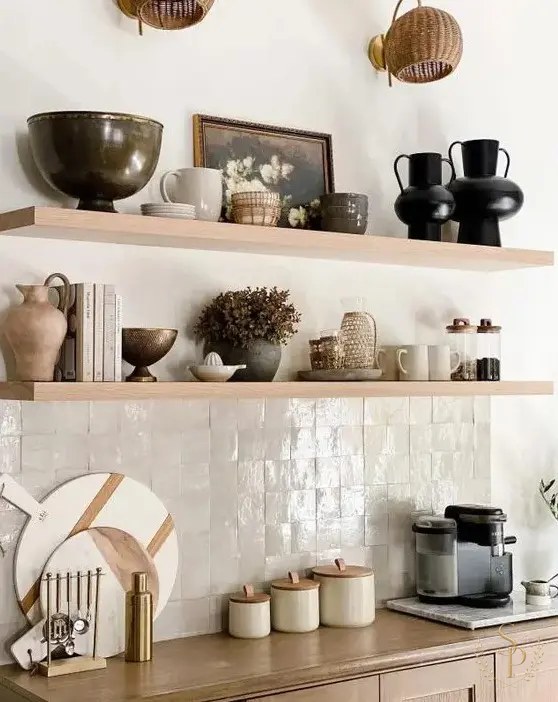
After you have forty or fifty images, sit down with them all on one screen and look for the repeats. Almost always, a clear pattern emerges. Maybe every room you saved has natural light streaming through linen drapery. Maybe every kitchen has unlacquered brass. Maybe every space is quiet, neutral, and layered, even when the styles look different on the surface. That repeating thread is your direction — and it's almost never what you would have said in words.
I do this with clients in our first meeting. We spread their saved images across a screen and I ask them to pull out the ten they would still keep if they had to delete the rest. Those ten images, almost without exception, hold a remarkably consistent point of view — even when the client swore they had no idea what their style was.
Be honest about your life, not just your taste
Here's the part most mood boards skip: the reality check. A breathtaking white linen sectional is not the same piece of furniture in a home with two golden retrievers and a four-year-old. A plaster fireplace surround that looks soft and chalky in photos has to be wiped down every time someone touches it. An open shelf full of styled ceramics requires someone to dust them.
Before you fall in love with a direction, ask yourself a few quiet questions:
- Who actually lives here, and how do they move through the day? Kids, pets, frequent guests, a partner who works from home — all of it shapes what's feasible.
- How much upkeep am I genuinely willing to do? Honest answer. Not aspirational answer.
- What does this house need to handle? A weekend retreat is not a primary residence. A home that hosts Thanksgiving for twenty is not a home for two empty-nesters.
- What's the climate doing to my materials? Hill Country sun fades fabric. Coastal air pits brass. Texas humidity moves wood. Beautiful is the easy part — durable in your specific environment is the harder one.
- What's already non-negotiable in the room? The grand piano, the inherited armoire, the painting from your mother. Those are starting points, not problems.
Edit ruthlessly, then keep editing
Once you've identified your through-line and reality-tested it, go back to your board and cut anything that doesn't belong. This part feels brutal — those rooms are gorgeous! — but a focused mood board is what lets a designer source confidently. Twenty aligned images are infinitely more useful than two hundred mixed signals.
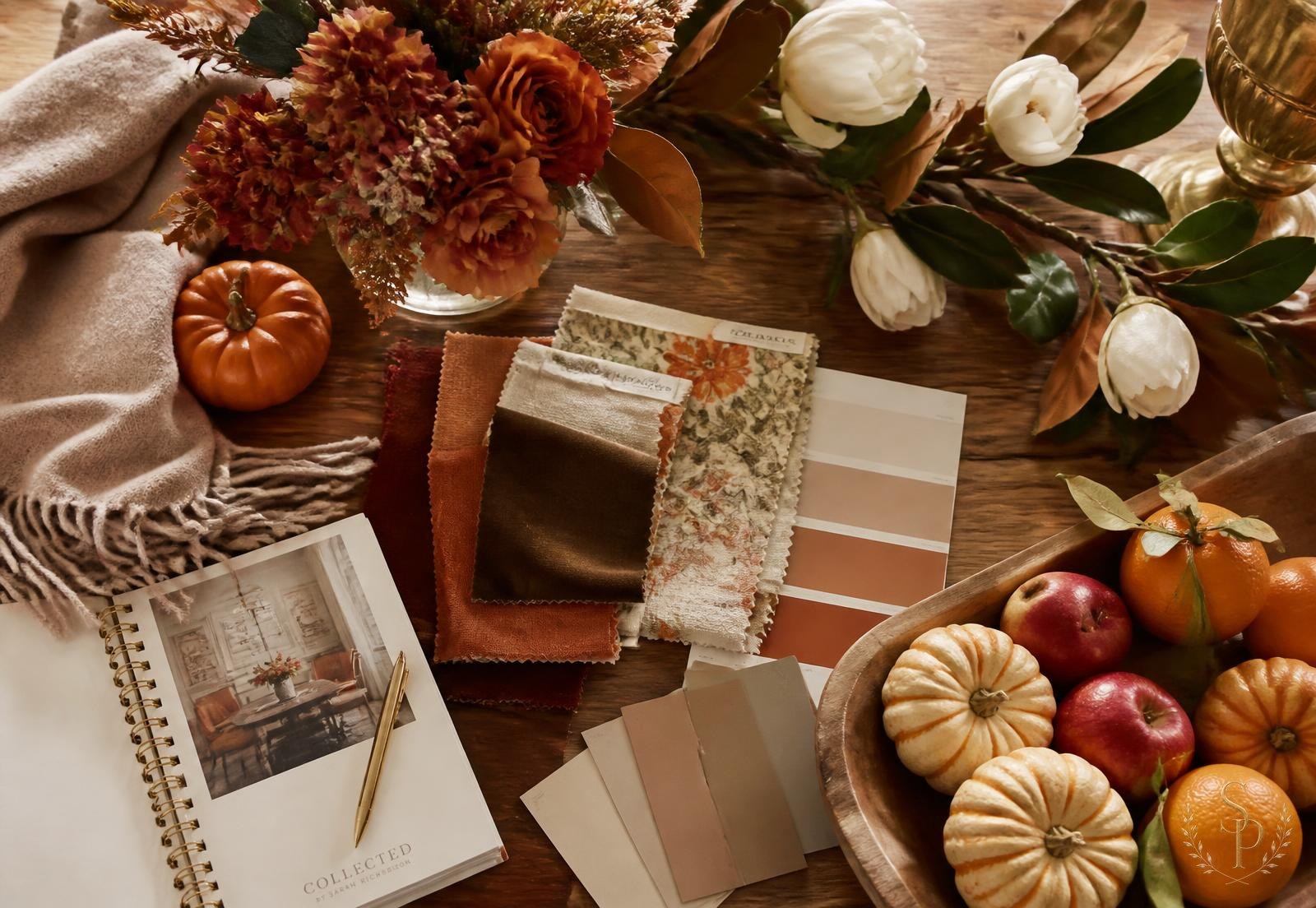
Group what's left into a few simple categories: palette, materials, furniture silhouettes, lighting, and a handful of full-room references that capture the overall feeling. That's a mood board your designer can actually build a home from.
Remember: a mood board is a compass, not a blueprint
The point isn't to recreate any single image exactly. The point is to define the direction so that when your designer sources a sofa you've never seen, or a paint color you'd never have picked, you can both look at the mood board and ask one question: does this belong here? When the answer is an easy yes, you know you've built the board right.