Style Guide
Hill Country Modern vs. French Country
Two of the most beloved looks in residential design — and two specialties of this studio. They share more than people expect: both lean on natural materials, soft light, and the quiet beauty of things that age well. The differences are mostly in mood and silhouette. Here’s how I tell them apart, and how I blend them in real Texas homes.
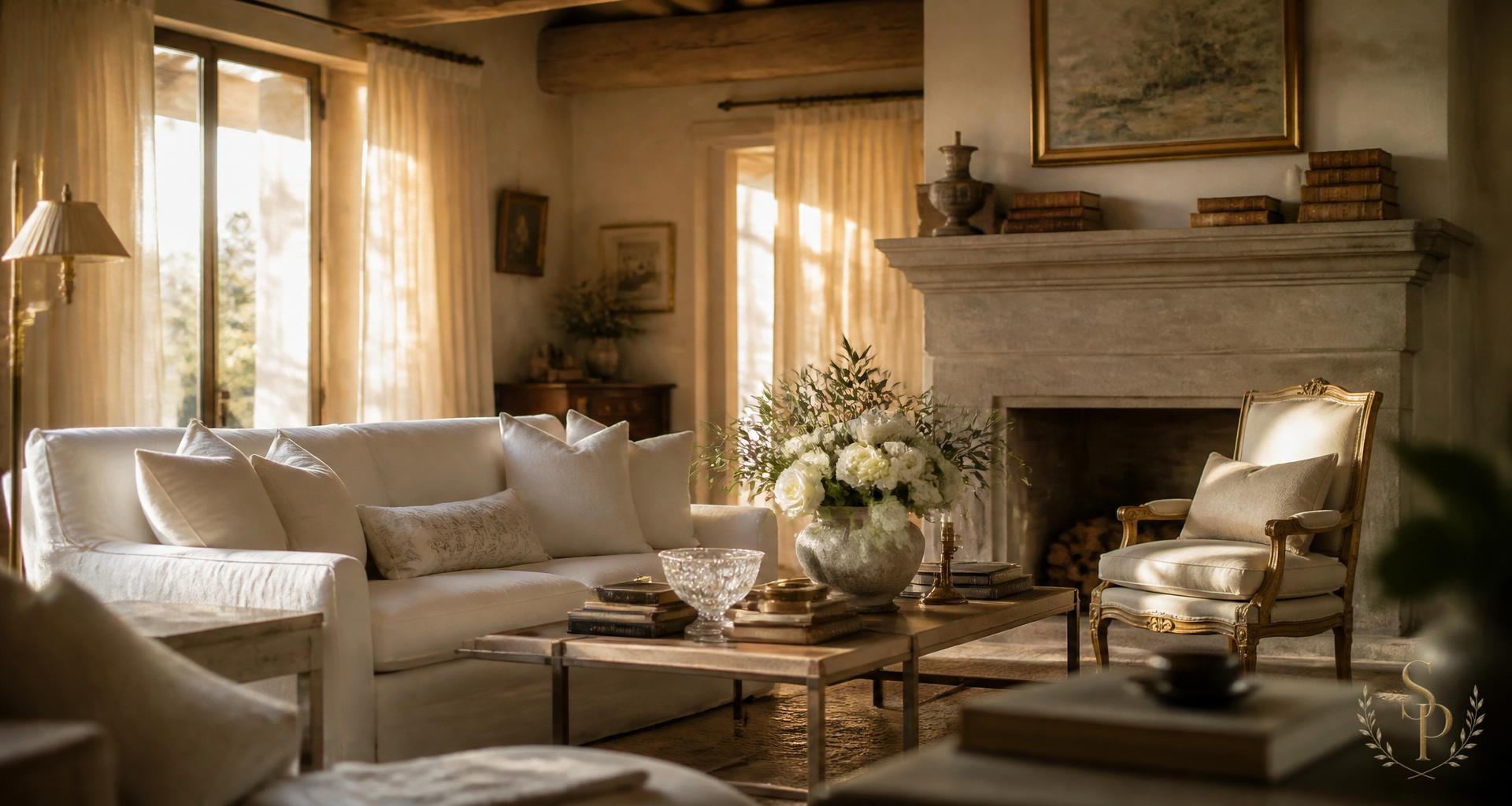
The short version
Texas Hill Country Modern is grounded, quiet, and tied to the landscape — limestone, raw oak, plaster, and a restrained palette pulled from the land itself. French Country is romantic and collected — warm whites, antiques, soft pattern, and a sense that every piece has a story. Both styles love natural light, honest materials, and a little wear. That shared DNA is exactly why they layer so well.
Side by side
| Topic | Hill Country Modern | French Country |
|---|---|---|
| Palette | Warm whites, limestone, weathered oak, soft sage, and graphite for contrast. | Ivory, butter, dusty blue, faded ochre, and the warm patina of antique gilding. |
| Materials | Local stone, raw white oak, plaster walls, blackened steel, and natural linen. | Plaster, limestone, walnut, terracotta tile, cane, and hand-finished linen. |
| Furniture | Clean-lined slipcovered sofas, simple oak tables, and a few sculptural modern pieces. | Curved bergères, painted armoires, marble-topped commodes, and antique farm tables. |
| Lighting | Blackened iron and unlacquered brass — pendants, sconces, and a single statement fixture. | Crystal or tole chandeliers, brass sconces, and softly shaded table lamps. |
| Textiles | Heavy linen, raw wool, leather, and tonal stripes — quiet, tactile, undyed. | Toile, ticking stripe, embroidered linen, and faded floral chintz used sparingly. |
| Mood | Grounded, quiet, and modern — rooms that feel like the landscape outside the window. | Romantic, collected, and timeworn — rooms that feel handed down through generations. |
Where they overlap
Both styles favor plaster walls, limestone, warm woods, and unlacquered metals. Both prize natural linen, candle-soft lighting, and rooms that look better as they age. And both quietly reject anything too shiny, too matched, or too new. If you love one, you almost always love the other — you just have to decide how much romance you want.
How I blend them in a Hill Country home
- Anchor with Hill Country bones — plaster walls, oak floors, and limestone — then introduce one or two French antiques per room.
- Repeat a single warm metal (unlacquered brass works for both) across lighting, hardware, and small accessories.
- Use linen everywhere: slipcovered seating reads Hill Country, while a skirted table or pleated drapery reads French country.
- Edit color hard. Keep walls and large upholstery quiet, and let pattern arrive in a single toile pillow, a faded rug, or a hand-blocked lampshade.
- Mix one curved silhouette per room — a bergère, a cabriole-leg side table, a curved plaster lamp — to soften Hill Country's straighter lines.
Which one is right for you?
If you want rooms that feel calm, architectural, and tied to the land outside your windows, lean Hill Country Modern. If you want rooms that feel warm, layered, and a little romantic — with the sense that pieces have been collected over a lifetime — lean French Country. Most of my clients land somewhere in the middle, and that quiet, French-warmed Hill Country home is one of my favorite places to design.